Pumped storage hydropower and the case for resilient, autonomous, sovereign energy systems
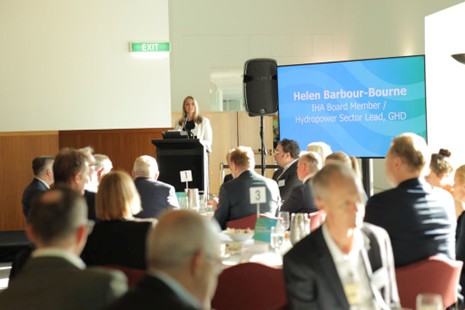
This blog was written by Helen Barbour-Bourne, Hydropower Sector Lead, GHD
Power systems are being asked to do more, more often, and under greater pressure. Recent global energy shocks have reinforced how quickly supply disruptions, fuel price volatility and geopolitical instability can flow through to electricity systems. In that context, resilience and energy sovereignty are no longer abstract policy objectives; they are becoming defining requirements of modern power systems.
As weather events intensify, supply chains become more exposed and electricity markets evolve, the question is no longer whether resilience matters. It is whether our market and policy settings are keeping pace with the services the system now depends on, and the changing geopolitical environment.
This question has been a consistent theme in my recent engagement with industry, including discussions through the International Hydropower Association and as part of an IHA delegation to Canberra. Across these conversations, the message has been clear. Pumped storage is technically proven and strongly aligned with future system needs, yet too many projects are struggling to move beyond development. This is not a question of confidence in the technology but one of alignment.
A changing operating environment
Electricity systems are being reshaped by the rapid growth of wind and solar. This has delivered clear benefits, including lower emissions and lower marginal generation costs, and it has changed the way power systems behave.
As variable generation increases, the need for assets that can support the system through periods of stress becomes more pronounced. These needs are not theoretical. They show up during extended weather events, supply shortfalls and major outages. They also show up in the everyday task of maintaining frequency, stability and reliability.
Pumped storage has long provided these services. Its ability to move quickly between charging and generating, operate over long durations and support system recovery is well established. What has changed is the extent to which power systems now rely on those capabilities, and the scale at which they are required.
Sovereignty and autonomy in storage
As Chris Bowen, Minister for Climate Change and Energy, said, “Renewables are sovereign, cheap and reliable, our wind and solar are ours.”
The same should be true of our energy storage.
This is not theoretical; pumped hydro provides that foundation. Once built, it can deliver sovereign, 100-year-plus storage capacity, anchoring the system for generations, just as Snowy Hydro and Hydro Tasmania have for the last century.

Investment decisions under strain
One of the strongest themes I see across projects is the disconnect between asset life and investment frameworks.
Pumped storage projects are built to operate for decades. They are major civil assets that provide system value well beyond energy production alone. Yet in many markets they are still expected to rely on revenue signals that are short-term and volatile.
There is a perception that private capital is unwilling to engage with this type of infrastructure. In practice, that has not been my experience. Investors regularly take on development and construction risk in complex projects. The difficulty arises when long-term system value is not reflected clearly or consistently in market arrangements.
In Australia, this tension is becoming increasingly visible. Developers have already committed significant time and capital to early-stage work. Environmental approvals, geotechnical investigations and design activities are well advanced across a number of projects. As these projects approach final investment decisions, uncertainty around long-term revenue and risk allocation is proving difficult to resolve.
In Australia, there is also growing recognition of this challenge. Insights emerging from the Nelson Review, and the development of longer-term market constructs such as the Energy Security Mechanism, reflect an intent to move beyond short-term price signals toward frameworks that better value reliability and system resilience.
However, a fundamental mismatch remains. Pumped storage is designed as a multi-decade, intergenerational asset, with value delivered consistently over very long operating lives. By contrast, investment frameworks and revenue mechanisms are still often calibrated to much shorter time horizons.
Emerging models such as the Energy Security Mechanism are a step in the right direction, explicitly seeking to address this tenor gap. Realising their full potential for long-duration storage, however, will likely require further evolution at a state level, where more tailored approaches and clearer pathways for large-scale, long-life assets may be needed.
Bridging this gap will be critical. Without it, projects capable of delivering enduring system value risk stalling—not due to technical or investor limitations, but because the frameworks around them are not yet fully aligned with the nature of the assets themselves. That outcome should give pause. When technically viable projects stall at this point, it suggests a structural issue rather than a project-specific one.
Lessons from global markets
The conversations in Canberra also reinforced how widely shared these challenges are.
In Europe, there is active work underway to adapt market frameworks so they better recognise flexibility and long-duration capability. In the United States, there is increasing discussion about how existing market models can evolve to support large storage assets.
In contrast, some markets are taking a more directive approach. The Philippines, through its Green Energy Auction Program, is explicitly defining the mix of technologies required across generation and storage. Successive auction rounds have set clear capacity targets and incorporated a broad range of technologies, including solar, waste to energy, onshore and offshore wind and pumped storage, with run-of-river hydro providing strong signals to the market about the system outcomes being sought.
This more intentional approach to system design is helping to translate policy objectives into investable opportunities, with clearer pathways for both generation and storage technologies.
From my perspective, the value of looking across regions is not about finding a single solution to replicate. It is about recognising that the issues facing Australia are not isolated—and that progress depends on deliberate choices about how system value is defined, structured and ultimately delivered.
A practical challenge for the sector
The focus on energy security continues to sharpen. Alongside reliability and affordability, there is growing recognition of the importance of resilience and independence in domestic energy systems, particularly in a world where fuel markets and critical supply chains are increasingly exposed to geopolitical disruption.
Power systems that rely heavily on imported fuels remain structurally exposed during periods of uncertainty. By contrast, technologies that draw on local, enduring resources play a fundamentally different role. Hydropower, and pumped storage in particular, reduces reliance on external supply inputs and provides stability that sits largely within national control.
This dimension of resilience is increasingly shaping how governments, system planners and investors think about long-term infrastructure decisions.
From recognition to delivery
The role of pumped storage in future energy systems is well understood. The challenge now is not one of awareness, but of delivery. Progress will depend on more deliberate alignment between policy settings, market frameworks and the long-term value these assets provide.
There are practical steps that can support this shift. Clearer recognition of long-duration storage within market design, more consistent approaches to valuing system services beyond energy, and mechanisms that provide revenue certainty across asset lifecycles will all be critical. Equally important is continued coordination between governments, system planners and industry, so project development pathways remain viable as projects move toward final investment decisions.
Australia has a strong pipeline of technically sound pumped storage projects, supported by deep industry capability and sustained investor interest. Progressing these projects, however, will depend on how effectively the current disconnect between system need and market signals is addressed.
If that alignment can be achieved, pumped storage can move from being a recognised solution to a delivered one, underpinning a more resilient, reliable and self-sufficient energy system for the decades ahead.