Close

Global Alliance for Pumped Storage

The Global Alliance for Pumped Storage (GAPS) is an intergovernmental alliance dedicated to promoting and scaling pumped storage hydropower worldwide. Pumped storage is an essential element to supporting renewable energy and ensuring energy security in an era of rapid transition to wind and solar power.

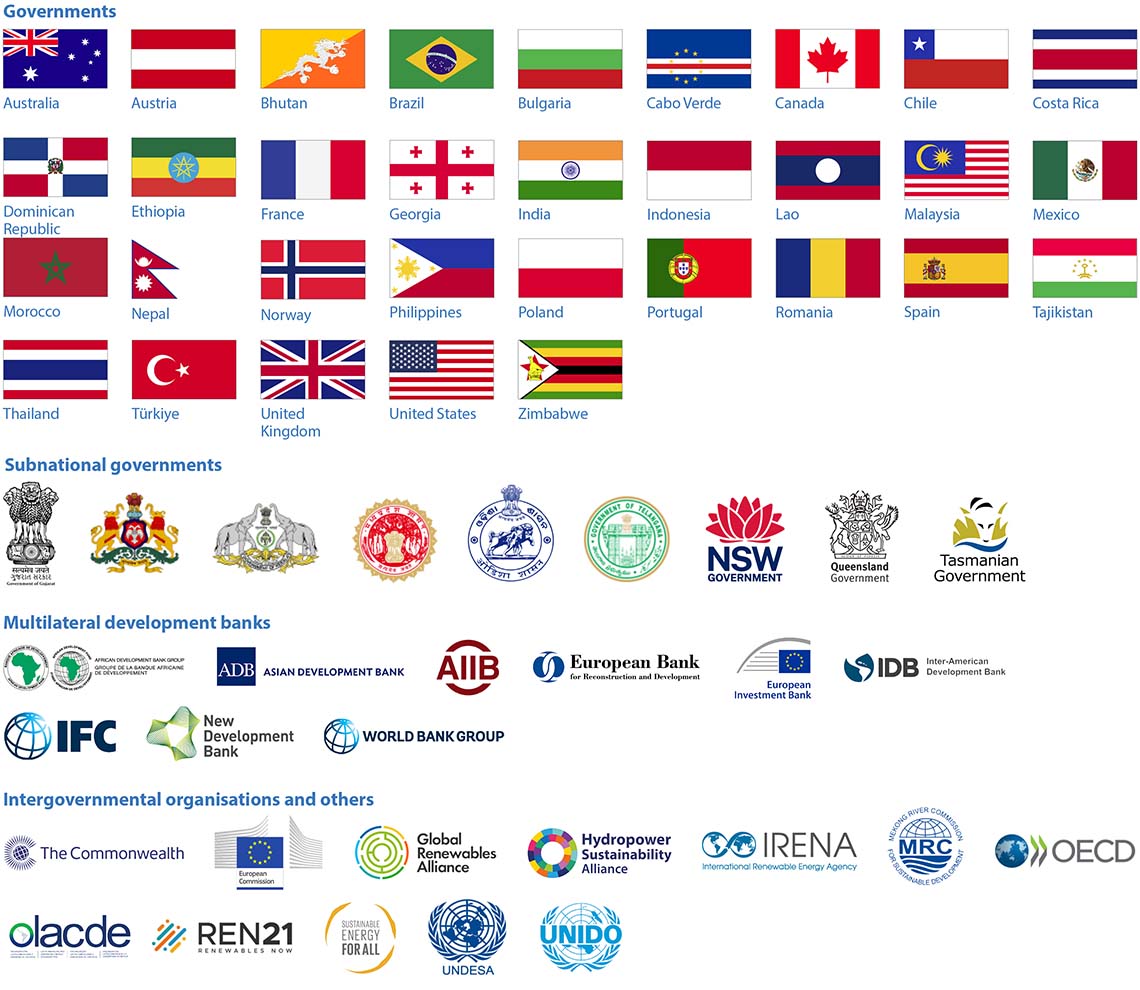
Initiative partners:

In collaboration with:

Since its launch in November 2024 at COP29 in Baku, Azerbaijan, the Alliance has brought together around 60 governments and international agencies including Australia, Brazil, Canada, the EuropeanCommission, India, Indonesia, Mexico, Philippines, Spain, the United Kingdom, the United States, IRENA, IFC, World Bank, and many others. The Alliance promotes the role of pumped storage in energy security, flexibility, resilience, affordability, climate adaptation and economic growth; identifies opportunities for supporting it's development and convenes participants to share policies and practices that allow for pumped storage development. IHA acts as the Secretariat to GAPS.
The GAPS Principles (see below) were adopted at the International Forum on Pumped Storage Hydropower in September 2025 as the binding document of the Alliance. The Forum was the largest international gathering focused on pumped storage to date, with over 500 people in attendance at UNESCO House in Paris to determine the work that will be required to super-charge pumped storage development in the next decade.  

Key recommendations for policymakers

Recommendation 1

Assess how much long duration storage and system flexibility is needed in the long-term

Pumped storage (PS) takes a long time to develop, build and pay back. At the same time, energy systems are rapidly transforming to accommodate changes in demand and supply, particularly growth in wind and solar power, making it essential to plan for future reliable energy systems which have sufficient long duration energy storage. If developers have confidence in the need for PS projects and the quantity of long duration energy storage required, then they can put the right amount of development money in upfront, de-risking projects and bringing them in on time and on budget. To deliver this win-win, Governments should seek expertise on how to assess, plan for, and build reliability, flexibility and security into energy systems.

How to apply
Recommendation 2
Recommendation 2

Identify appropriate sites for pumped storage plants

Policymakers can accelerate development of pumped storage in their countries by filtering the many potential sites and highlighting those with the best economic, social and environmental outcomes. The efficiency of the energy system can be greatly enhanced by integrating the development of pumped storage with the extension of grid infrastructure, and with wind or solar energy. Holistic site planning will therefore bring significant system benefits.

How to apply
Recommendation 3
Recommendation 3

Implement fit-for-purpose permitting procedures

A predictable and time-bound permitting process will speed up approval and reduce costs, ultimately benefitting consumers. Streamlining processes so that developers are dealing with only one agency and ensuring all branches of government are adequately resourced to respond quickly will result in timely decisions. Aligning environmental and social permitting with international standards, such as the Hydropower Sustainability Standard, ensures that the regulations, financial approvals, and company systems all align with recognised international good practice.

How to apply
Recommendation 4
Recommendation 4

Apply mechanisms that deliver the necessary revenue visibility over a long period

The bulk of investment in PS projects is in the construction phase, which must be paid back over a long period. Combined with high capital costs and long build schedules, this makes these projects especially vulnerable to long-term revenue risk. If the project’s income is uncertain (e.g. due to unknowns such as electricity markets or policies), then the return demanded by lenders and investors will be higher. Consequently, it is difficult for the market alone to deliver these projects. Projects need a mechanism that provides revenue certainty, which will attract greater investment.

How to apply
Recommendation 5
Recommendation 5

Design electricity markets so energy storage assets are rewarded

It is important that energy storage providers receive appropriate remuneration for all the services that they provide to the system. In liberalised economies, this includes the arbitrage income that is available from being able to buy power cheaply when there is a surplus of variable renewables and sell it for a higher price when there is a deficit.

How to apply
Recommendation 6
Recommendation 6

Procure and pay for ancillary services separately

PS can naturally provide lots of essential services for a reliable energy system – instantaneous physical inertia services (including frequency control services), fast start-up and shutdown and black start capabilities. Many of these services are not paid for in their respective electricity markets but grids will need them to support deployment of variable renewable energy technologies. Without clear payments for these services, projects may be built that are less capable of delivering them, or projects that are capable might not be as well maintained. The system operator should contract with them on a long-term basis.

How to apply

Recommendations in action

“In a clean energy world dominated by solar PV, pumped storage is more important than ever. This group will accelerate pumped storage’s adoption and enable governments to collaborate on the best practices to support pumped storage development.”

“This global alliance will promote the value of long-term planning and the need for robust, enduring solutions that extend far beyond any four-year political cycle. By establishing a global commitment to pumped storage and setting bold targets for energy storage, we are laying the foundation for a greener, more resilient energy future-one that will serve generations to come.”
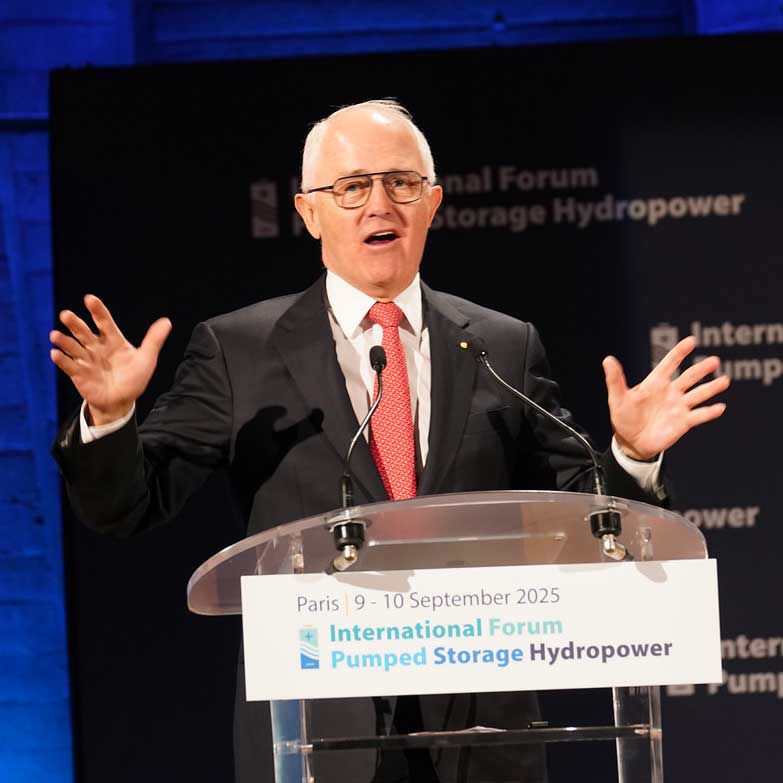
Malcolm Turnbull, IHA President

GAPS Principles

1

Reaffirm the essential role of pumped storage in energy security

2

Underscore pumped storage as an essential asset for strengthening power system flexibility and resilience

1

Reaffirm the essential role of pumped storage in energy security

2

Underscore pumped storage as an essential asset for strengthening power system flexibility and resilience

3

Recognise the importance of using pumped storage to support affordability of clean energy

4

Welcome the dual role of pumped storage in climate mitigation, adaptation, and resilience

5

Support pumped storage as drivers of economic growth and job creation

6

Reinforce a platform for sharing industrial good practice and innovation

7

Note the importance of establishing long duration energy storage targets

8

Emphasise the importance of government involvement and private partnerships to mobilise efforts

9

Drive workforce and skills development

10

Affirm the importance of sustainability

The Principles have been recognised by governments and international agencies to accelerate the clean energy transition using pumped storage hydropower.These underline the critical role of pumped storage for energy security, flexibility, resilience, affordability, climate adaptation and economic growth.

Pumped storage policy map

GAPS supports knowledge exchange between GAPS participants and tracking policy developments globally that support pumped storage.

Joining GAPS

GAPS Participation is limited to governments, intergovernmental organisations, and international financial institutions. Participants are strongly encouraged to attend all GAPS meetings at the appropriate level.

Participants are encouraged to support the GAPS Principles.

If you are interested in finding out more about how to join GAPS, and its upcoming activities, please contact Rebecca.Ellis@hydropower.org

Pumped storage resources

Enabling new pumped storage hydropower

READ MORE

Factsheet

READ MORE

Global storage target

READ MORE

Tracking tool

READ MORE

Opportunities for pumped storage development

READ MORE

Case studies from around the world

READ MORE

Policy frameworks for pumped storage hydropower development

READ MORE
Privacy Policy