30 years of advancing sustainable hydropower, together | #IHA30 | READ MORE


Floating solar, also known as floating photovoltaics (FPV), involves installing solar panels on water bodies such as reservoirs, lakes and hydropower dams. By using existing water infrastructure, floating solar represents a rapidly growing solution that complements conventional land-based renewables, while supporting more integrated energy systems. It is renewable energy collaboration in action.

Floating solar systems consist of photovoltaic panels mounted on buoyant platforms, anchored to the bed or shoreline of a water body. Electricity is transmitted to shore via underwater cables, often connecting directly to existing grid infrastructure.
A key advantage is efficient land use. By generating power on water, floating solar avoids competition with agriculture, urban development and ecosystems.
Floating solar delivers a range of environmental and operational benefits:
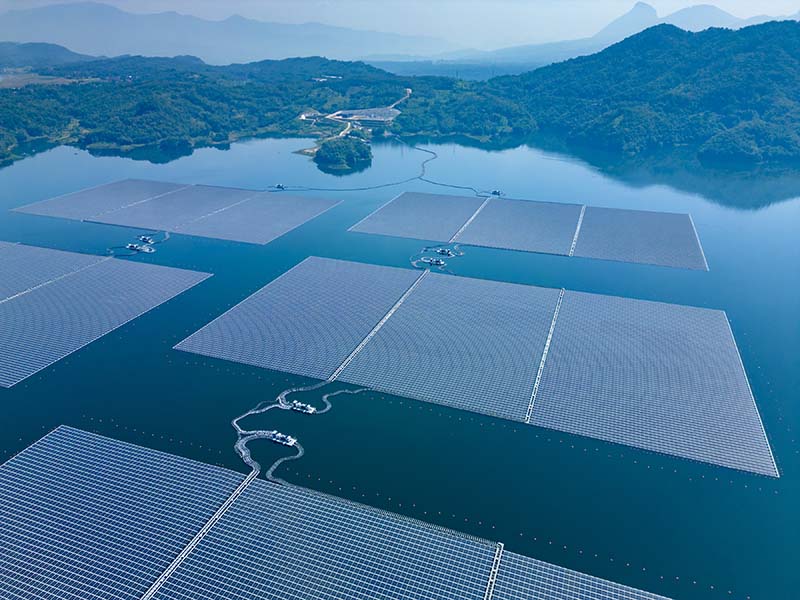
Floating solar is a uniquely suited integration with hydropower, creating hybrid renewable systems that maximise the value of existing infrastructure.
Hydropower reservoirs provide ideal sites for floating solar installations due to their large surface areas, grid connections and established energy management systems.
This co-location enables several important synergies:
These hybrid systems can also smooth power output and improve grid stability, addressing one of the key challenges of variable renewable energy.
The global potential for floating solar on hydropower reservoirs is significant. Even modest coverage of reservoir surfaces could deliver substantial additional generation while conserving water and reducing emissions.
By combining two established renewable technologies, floating solar and hydropower demonstrate how integrated approaches can accelerate the clean energy transition. This collaboration enables more efficient use of natural resources, enhances system resilience and supports the shift towards low-carbon energy systems.
The International Hydropower Association (IHA) is a member of the Global Renewables Alliance (GRA), reflecting the importance of collaboration across renewable energy technologies to deliver a sustainable energy future. Learn more about the GRA.
