Eddie Rich elected Chair of the Hydropower Technical Standards Committee
Eddie Rich elected Chair of the Hydropower Technical Standards Committee
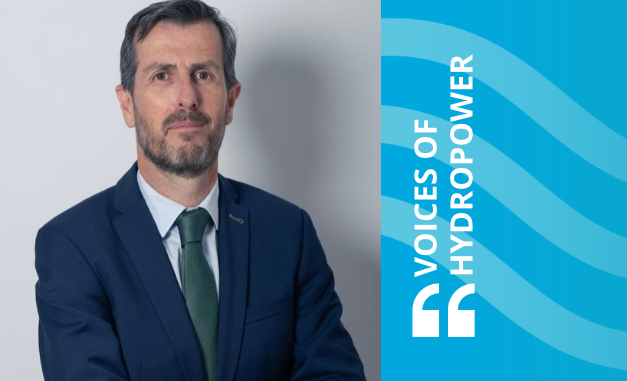
The Global Energy Interconnection Development and Cooperation Organization (GEIDCO) has set up the GEI Standards Management Committee. Together with its members, GEIDCO is establishing 12 Technical Committees for standards development. Eddie Rich, CEO of the IHA, was today elected Chair of the Hydropower Technical Standards Committee.
He has committed to ensure that the Standards developed for the sector build on and complement existing standards, especially the Hydropower Sustainability Standard that IHA was instrumental in establishing.
Below he writes about why he thinks that Standards are timely and will catalyse better decision making and more innovation in the hydropower sector and why he took on this role.
----
Let me start with a paradox.
Many of the most important advances in infrastructure are things nobody notices.
Nobody visits a hydropower plant and admires the procurement specification. Nobody takes photographs of a maintenance protocol. Nobody gives awards for interoperability requirements.
And yet, these often matter just as much as the concrete and steel.
To see why, consider the shipping container. Global trade didn't take off because someone invented a better box. It took off because the industry agreed on standard dimensions, lifting points, and handling procedures. Once that happened, ports, ships, railways and trucking companies could all work together as one system.
The real innovation was coordination.
Hydropower faces exactly the same challenge.
Every project is unique. Different catchments. Different geology. Different hydrology. Different equipment suppliers. Different operating regimes. As engineers, we rightly focus on those differences.
But the industry's long-term success depends on identifying what should not be different.
Take dam safety.
Virtually every major dam operator today follows structured approaches to risk assessment, surveillance, instrumentation, inspections and emergency planning. These practices emerged because the industry learned that while every dam is unique, the consequences of overlooking seepage, deformation, spillway adequacy or operating procedures are remarkably similar.
Take social and environmental considerations.
Following the World Commission on Dams Report in 2000, which was critical of the impact of dams on people and the environment, governments, companies, banks, and NGOs, spent two decades developing an agreed set of requirements. In 2021, this became the Hydropower Sustainability Standard and is now the internationally recognised benchmark across 12 topics including dam safety, climate resilience, resettlement, biodiversity, labour, etc. By establishing a single point of truth, the Standard has facilitated financial approval, consistent policy and regulations, and de-risked projects. This has speeded approval and reduced costs. Projects in every continent in the world have been certified. The sector is now better trusted.
Standards became a way of turning individual experience into collective learning.
They allow an operator in Norway, Canada or China to benefit from lessons learned elsewhere rather than discovering them independently.
Standards provide the common language through which good engineering can be demonstrated, shared and continuously improved.
So when we talk about industry standards, we're not really talking about documents. We're talking about the mechanism by which knowledge accumulates across generations of projects.
They're the industry's memory. It therefore makes sense to establish a group of industry experts to shape the standards to shape the industry.
The objective GEI Technical Committee is to foster international collaboration on hydropower technology, pumped storage development, watershed utilisation, and drive continuous technological advancement across the global hydropower industry, It will cover six themes:
- Power generation equipment technology
- Basin cascade coordinated dispatching and multi-energy complementarity
- Hydropower flexibility enhancement and adaption to new power systems
- Eco-friendly hydropower construction and operation
- Pumped storage technology
- Digital intelligence.
The Secretariat is provided by the Huadian Electric Power Research Institute. In April 2026, China Huadian issued an open global call for Committee members. This was reinforced by a further call by IHA in August. Based on that, an inaugural membership of 31 has been selected. The nominees come from sixteen countries – mostly from companies, but also from research institutions. Joao Costa will represent the Hydropower Sustainability Alliance. The first meeting of the Committee will take place today 27 Oct 2026.
I’m honoured to take up the role of Chair of the Hydropower Technical Standards Committee. I hope to ensure that whatever is developed will build our collective knowledge, speed up our delivery, and contribute to innovation. With a platform of strong and relevant standards, the hydropower sector will become the backbone of a secure, reliable, resilient and affordable clean energy future.