Open letter to UK Secretary of State: The UK cannot afford to miss its next opportunity to build pumped storage
IHA President and Former Prime Minister Malcolm Turnbull sends an open letter to UK Secretary of State, The Rt Hon Miatta Fahnbulleh MP about the potential to seize the opportunity to unlock a new generation of pumped storage in the UK, by ensuring that Window 1 of the cap and floor regime provides the investable framework needed to deliver the projects. Pumped storage must be recognised as critical national infrastructure, essential to strengthening the UK’s energy security and safeguarding its energy sovereignty.
The UK stands at a pivotal moment in shaping its future energy system. I am writing to urge your Government to seize the opportunity to unlock a new generation of pumped storage in the UK. Working with Ofgem, it is vital to ensure that Window 1 of the cap and floor regime provides the investable framework needed to deliver these projects. Pumped storage must be recognised as critical national infrastructure, essential to strengthening the UK’s energy security and safeguarding its energy sovereignty.
A secure, affordable, and resilient electricity system requires flexibility at scale provided by long lasting assets. With curtailment costs having risen to more than £1bn annually, the UK urgently needs a large quantity of long-duration electricity storage to reduce the burden on consumers and their exposure to volatile gas prices. Without this capability, the UK risks undermining the full value of its investment in renewable generation.
Pumped storage is the most proven, large-scale, and cost-effective long-duration electricity storage technology and is available to meet this challenge. It can:
- store and release enormous quantities of electricity over extended periods;
- respond rapidly to changing system needs;
- operate for over 100 years;
- significantly reduce overall system costs and emissions;
- avoid overreliance on complex supply chains; and
- stimulate local economies with higher local employment than alternative storage technologies.
UK Government-commissioned analysis demonstrated that long-duration storage technologies, primarily represented by pumped storage, could deliver up to £24 billion in system benefits and reduce total electricity system costs by 3.5%, shielding consumers from volatile fossil fuel markets and providing more efficient use of homegrown renewable generation.
The Clean Power 2030 Action Plan targets 40-50 GW of dispatchable and long‑duration flexible capacity. To support this ambition, the Labour Government has backed a long-duration electricity storage Cap and Floor regime. This is welcomed by the sector. Under the Window 1 Minded-to Decision, 16 projects totalling 7.6 GW of electricity storage projects were selected. Pumped storage projects were rated highest for economic value, accounting for 3.9 GW and over 60% of total storage capacity. On average, these projects provided 4x more power and 7x more electricity storage than all other technologies.
Because pumped storage projects are major civil and mechanical engineering undertakings, they will mobilise and reinforce British expertise, strengthen domestic supply chains and create thousands of skilled jobs. Projects such as Coire Glas in Scotland illustrate the scale of the potential economic contribution, with the project expected to support around 3,000 construction jobs, drive £2 billion in spending with UK businesses and generate £1.5 billion in local economic value.
This is precisely the kind of investment that can advance the UK's ambitions for economic growth and energy security simultaneously. It creates lasting value for local communities, competences and know-how that will be exported for decades, while providing the foundations of a resilient national electricity system.
During my tenure as Prime Minister, my government recognised that Australia's electricity system was entering a period of profound transformation. As ageing coal-fired generation approached retirement and increasing volumes of wind and solar power entered the grid, it became clear that the nation would need large-scale, long-duration electricity storage to maintain reliability, affordability and energy security. The UK now faces a similar strategic choice.
As President of the International Hydropower Association, I urge you to work closely with Ofgem to take into consideration the feedback provided by UK developers through recent consultations and ensure that the final Window 1 framework reflects the financing and investment characteristics of large-scale pumped storage and provides the revenue certainty required for viable projects to reach final investment decisions. Without this, viable projects will not be built, and the costs will continue to be passed on to consumers.
The UK has the opportunity to demonstrate global leadership in building an electricity system that is not only cleaner, but more secure, affordable and resilient. The decisions made in the coming weeks will shape the UK's energy security, industrial competitiveness and electricity costs for generations. This is not simply about supporting individual projects. It is about recognising the strategic value of long-duration storage and creating the conditions to deliver the infrastructure the country will need.
The opportunity is here. The UK cannot afford to miss it.
Yours sincerely,
Hon Malcolm Turnbull
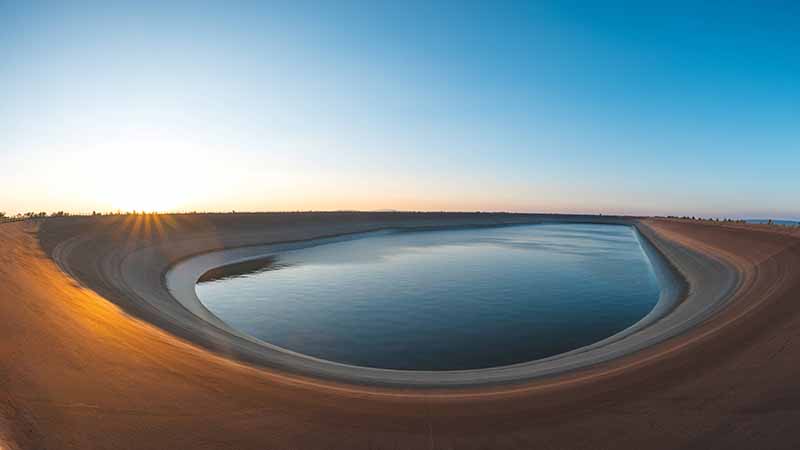
Photo by Adam Wilson on Unsplash