#IHA30 - How hydropower became the backbone of the energy transition
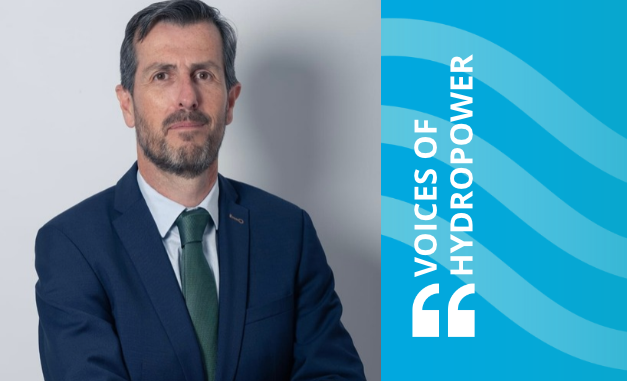
When wind turbines fall still and the sun goes down, the strength of hydropower comes into play. Reservoirs and pumped-storage plants act as the battery of the energy transition – invisible, yet indispensable. Thirty years on, one of the International Hydropower Association’s (IHA) founding members reflects on this journey. Declan Kelleher, Head of Innovation & Technology at Gruner Stucky Ltd, shares how hydropower has evolved from a giant of megawatts to the lifeline of flexible grids.
From dam monuments to system partner
Thirty years ago, hydropower was synonymous with monumental dams and national prestige projects. Dams were celebrated as symbols of progress, but also contested for their environmental and social impacts.
At the same time, the industry began developing new standards for sustainability. Lenders, regulators and engineers moved closer together. The result was greater professionalism, broader acceptance, and the foundation for hydropower’s transformation.
Clean energy yesterday, clean flexibility today
By the early 2000s, perceptions shifted. Hydropower was no longer seen purely as a generator of clean electricity, but as a flexible tool for modern grids.
Markets began rewarding what hydro could do beyond megawatt-hours: fast ramping, frequency stabilisation, essential system services. Hydropower moved from being a baseload supplier to becoming a stabiliser of variable renewables.
The sector itself started speaking of “clean flexibility” instead of only “clean energy.”
Pumped storage: the water batteries of the transition
No technology illustrates this shift better than pumped storage hydropower. When electricity is plentiful, water is pumped uphill; when it is scarce, it rushes back through turbines, delivering power on demand.
As highlighted in the 2025 World Hydropower Outlook nearly 200 gigawatts of these “water batteries” are installed worldwide, making up more than 90 per cent of global long-duration storage.
China is leading the charge, set to exceed its 120 GW target before 2030. Europe, after years of stagnation, is seeing new projects revived thanks to updated market rules. And in Africa, new capacity has more than doubled, showing hydropower’s potential to close energy access gaps and underpin industrial growth.
Sustainability as the key to the future
The industry has learned: hydropower is only acceptable if it is sustainable. The San José Declaration on Sustainable Hydropower of 2021 drew a clear line: projects must meet social and environmental standards, or they have no future.
The Hydropower Sustainability Standard now makes those standards measurable – from biodiversity and Indigenous rights to safety and cultural heritage.
Sustainability is no longer a slogan but a condition: for public acceptance and for finance. Developers who adopt these standards early not only win trust, but also save time and costs in the approval process.

Lessons from climate volatility
Recent years have exposed hydropower’s vulnerability to climate change. Prolonged droughts cut generation, while extreme rainfall and floods posed new risks. In 2024, abundant rainfall led to a production rebound – but the message was clear: resilience cannot depend on luck.
Today, more accurate forecasts, seasonal storage strategies and hybrid projects – for example, combining solar with hydropower – are no longer optional extras. They are baseline requirements for keeping grids stable in a volatile climate.
Modernise more, build less
The cheapest and fastest new capacity is found not in building new dams, but in modernising existing assets. Uprated turbines, renewed generators, reinforced spillways, sediment management and digital monitoring systems increase output and extend lifespans.
These upgrades often happen quietly, but their impact is immense: more flexible, safer, longer-lasting hydropower, with fewer environmental conflicts than new large-scale projects.
For many countries, modernisation is the most efficient way to unlock additional clean capacity.
Gruner‘s perspective: 30 years of partnership
As a founding member of the International Hydropower Association in 1995, Gruner Stucky Ltd is proud to have helped establish a global platform dedicated to promoting sustainable hydropower. This early commitment reflected a conviction that engineering excellence must evolve in step with social and environmental responsibility. Thirty years later, that principle continues to guide our work across continents.
Strengthening Infrastructure, Securing Energy Futures
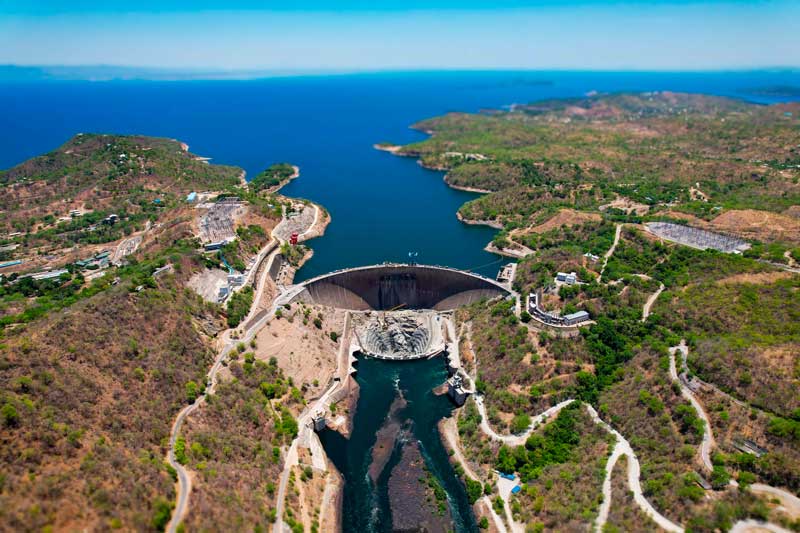
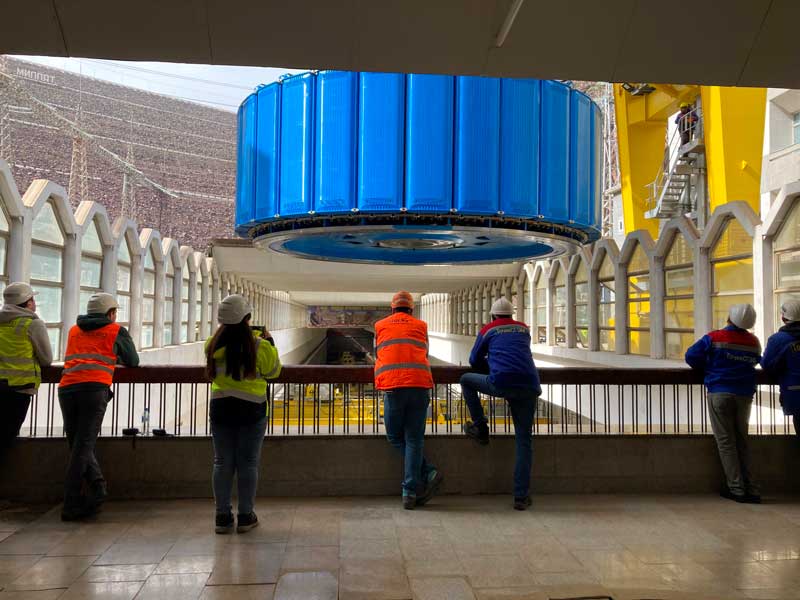
Gruner’s expertise has contributed to some of the most technically demanding hydropower and pumped storage projects worldwide. The Kariba Dam Rehabilitation Project, now approaching completion, has enhanced dam safety and secured a vital source of electricity for millions across Southern Africa. In Tajikistan, the ongoing Nurek Hydropower Rehabilitation Project is restoring one of Central Asia’s largest generation assets, improving both performance and operational flexibility while extending its service life for decades to come.
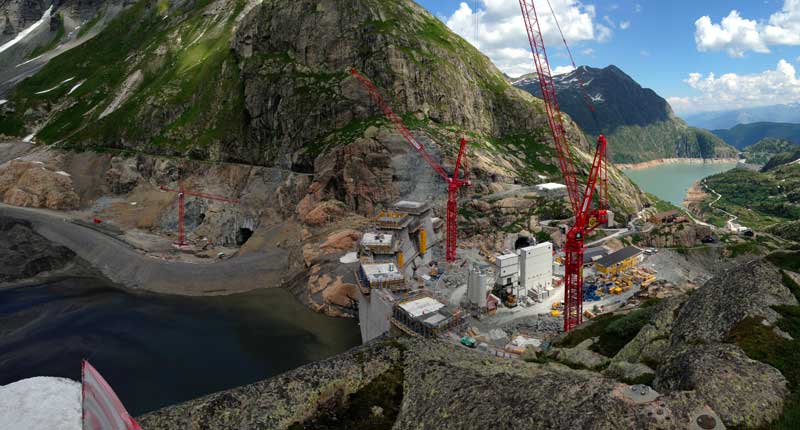
Our contribution to pumped storage development has been equally significant. In Switzerland, the Vieux Emosson Dam Heightening formed a key element of the commissioned Nant de Drance pumped storage scheme, creating one of Europe’s most powerful hydro batteries. Similarly, the commissioned FMHL+ pumped storage project successfully doubled the capacity of the existing 240 MW installation, demonstrating how careful modernisation and optimisation of existing infrastructure can unlock major gains in flexibility and capacity with minimal environmental impact. Beyond Switzerland, our teams are providing engineering and advisory services for new pumped storage projects in the Philippines, Spain, Scotland, Georgia and Australia , supporting the country’s strategy to integrate variable renewable generation through long-duration storage.
How Gruner has evolved with the market
Innovation is central to our contribution. Gruner has recently developed advanced AI- and machine learning-based inflow forecasting tools that provide probabilistic operational forecasts for dam owners and operators. These systems enhance the management of reservoirs under increasing climatic uncertainty, enabling more accurate scheduling, improved energy yield and safer flood management.
Our evolution mirrors that of the wider industry - from designing monumental structures to delivering adaptive, intelligent systems that ensure the stability, flexibility and reliability of the future energy mix. This evolution has also led us to expand our expertise beyond conventional hydropower engineering, offering new services such as BIM consultancy, scan2BIM, digital twins, and hybridization system design that integrates hydropower, battery storage, solar photovoltaic generation and other renewable technologies. Together, these capabilities position Gruner as a partner in shaping the next generation of sustainable, interconnected energy systems.
The agenda for the next decade
To mark its anniversary, IHA has set out a clear agenda. The top priority is recognising pumped storage as critical infrastructure, with financing models that reflect long lead times and essential grid services.
Next comes a systematic push to modernise existing plants. Sustainability must become non-negotiable, with verified results published for transparency. Preparing for climate extremes with better forecasting and hybrid solutions is also essential.
Contracts need reform too: risk-based agreements like those in the FIDIC Emerald Book and early contractor involvement can make projects more predictable. Finally, investment in people and supply chains is urgent – without skilled workers and reliable suppliers, neither modernisation nor new projects will succeed.
Hydropower at a turning point
When IHA was established in 1995, the case for hydropower rested on carbon-free megawatt-hours. Today its role is broader – and more urgent. Hydropower provides not only electricity, but also stability, flexibility and storage, without which grids with high shares of wind and solar cannot function.
The figures underline the momentum: 4,578 terawatt-hours of generation in 2024, 24.6 GW of new capacity added, and a development pipeline of more than 1,000 GW.
The challenge is not technology but time. The task now is to turn this pipeline into projects that communities accept, investors support and grids rely on.
________________________________________
About the Author
Declan Kelleher has worked for Gruner Stucky Ltd since 2015 and in the Energy and infrastructure sectors for nearly two decades, focusing on sustainable infrastructure and energy transition.
Gruner Stucky Ltd and IHA
Gruner Stucky Ltd, a Swiss engineering company, is one of the co-founders of the International Hydropower Association. Since 1995, it has been actively involved in advancing best practice and sustainability in the global hydropower sector.