


Voices of hydropower: Lamu Audu
Voices of Hydro introduces the people behind the power. In this series, industry leaders share how they’re driving the sector forward by tackling challenges, championing innovations and sharing moments that made them proud. These are the people who keep our lights on and our energy future, secure.
.png)
Please introduce yourself and tell us about your role.
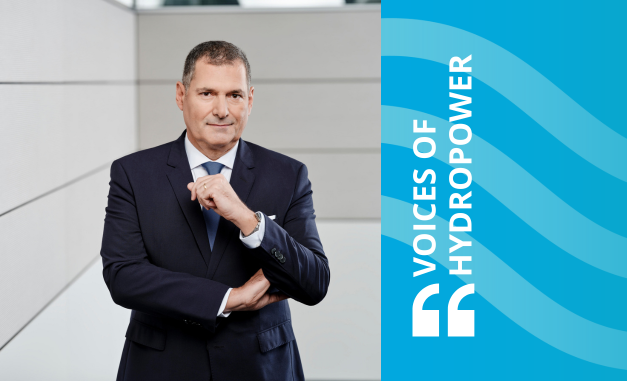
Engr. Lamu Audu is a distinguished mechanical engineer and the MD/CEO of Mainstream Energy Solutions Limited. With a bachelor's degree in mechanical engineering from the University of Maiduguri. Engr. Lamu's illustrious career spans over four decades, beginning with the Borno State Ministry of Works and Housing in 1986. Throughout his career, he has held key positions in various organizations, including Jebba Hydro Electric PLC where he served as Managing Director, before assuming the role of MD/CEO at Mainstream Energy Solutions Limited (MESL) in 2013.
Engr. Lamu's visionary leadership and innovative strategies have been instrumental in the growth and success of MESL, contributing to a significant increase in available generation capacity, the implementation of a comprehensive overhaul program, and capacity expansion at both Kainji and Jebba Hydropower Plants. His efforts have not only positioned MESL as a model of excellence in hydropower operations but have also contributed to the advancement of Nigeria’s electricity sector and the broader energy landscape.
The International Water, Power and Dam Construction (IWP&DC) recognized Engr. Lamu as one of the 75 most influential people in the global hydropower sector in its publication of May 23, 2024. He currently serves as Vice Chair of the Board of the International Hydro Power Association (IHA). Engr. Lamu Audu continues to advocate for the alignment of West Africa’s hydropower sector with international standards and best practices. His dedication to excellence and commitment to sustainable energy practices have earned him recognition from industry partners and academia while contributing to MESL’s position as a leader in the hydropower sector.
Over the course of his career, he has demonstrated a strong commitment to continuous professional development and has attained Fellowship status with several prestigious professional organisations, including:
- The Nigerian Society of Engineers (FNSE)
- The International Hydropower Association (FIHA)
- The Nigeria Institution of Power Engineers (FIPE)
- The Association of Forensic and Investigative Auditors in Nigeria (FAFIA)
- Fellow Corporate Governance and strategic Management (FCGSM)
- Fellow The Nigerian Academy of Engineering (FNAE)
What challenge in the hydropower sector is your organisation working to address?
One of the key challenges we are addressing is the availability and reliability of hydropower generating assets, particularly ageing infrastructure, obsolete equipment and the prolonged unavailability of generating units due to inadequate maintenance and rehabilitation before the assets were handed over to MESL by the government in 2013. Through our Capacity Recovery Plan (CRP), MESL has taken a systematic approach to restoring the performance of the Kainji and Jebba hydropower plants. We have progressively rehabilitated and overhauled generating units, with a focus on recovering previously unavailable capacity and improving the overall reliability of the plants. As a result, the combined available capacity of the two plants has increased from 482 MW at the time of MESL’s takeover in 2013 to 1,178.4 MW today.
At Kainji, the rehabilitation of several generating units has restored 600 MW of available capacity, while at Jebba, the overhaul and rehabilitation of previously unavailable units have restored the plant to its full available capacity of 578.4 MW. Alongside capacity recovery, we are addressing the challenge of ageing and obsolete plant equipment by replacing outdated components with modern, more efficient and digitally enabled systems. This is important not only for recovering capacity, but also for ensuring that these critical hydropower assets remain reliable, efficient and fit for the future.
What key technology or innovation is your organisation focused on?
At Mainstream Energy Solutions Ltd, our focus is on leveraging technology and innovation to improve the efficiency, sustainability, and resilience of our hydropower operations. This includes the adoption of modern technologies that enhance plant performance, optimize operations and maintenance, improve reliability, and support more effective monitoring and decision-making. We are also focused on ensuring that our infrastructure is resilient and sustainable over the long term. For us, innovation is not simply about adopting new technology; it is about using technology to maximize the value of our existing assets, improve operational efficiency, reduce environmental impact, and ensure reliable power generation for the future.
Is there a recent milestone or achievement from your organisation that you would like to highlight?
The past two years have been a significant period of progress for MESL, marked with substantial advances in the rehabilitation of our generating assets and the expansion of our hydropower operations. At the Jebba Hydropower Plant, we completed the rehabilitation of Unit 2G6 in 2024 and Unit 2G5 in 2025, both delivered by Andritz Hydro. At the Kainji Hydropower Plant, the rehabilitation of Unit 1G9 was completed in 2025 by PowerChina Huadong Engineering Corporation Ltd.
These projects represent important milestones in restoring generating capacity, improving plant reliability and extending the operational life of critical hydropower assets. In addition to the capacity recovery program at Kainji plant,MESL is currently expanding the plant’s installed capacity by 220 MW. We also expanded our operational portfolio through a 30-year concession for the 700 MW Zungeru Hydropower Plant, secured in 2024. This represents a significant addition to our portfolio and strengthens our contribution to Nigeria’s renewable energy capacity.
In addition, since August 2024, MESL has been responsible for the operation and maintenance of the 40 MW Kashimbila Hydropower Plant in Taraba State, in partnership with the concessionaire, KP Hydro Ltd. Together, these milestones reflect our commitment to recovering existing hydropower capacity, strengthening operational performance, and expanding the role of hydropower in Nigeria’s evolving energy landscape.
What are you most proud of at the moment?
I am particularly proud of the progress our team has made in restoring generating capacity and improving the operational performance of our hydropower plants. Seeing previously unavailable units return to service is significant not only for MESL, but for Nigeria’s power sector as a whole. Every megawatt restored contributes to a more reliable electricity supply and, ultimately, supports economic growth.
Equally significant is the progress we are making in unlocking additional capacity. The installation of Kainji Units 1G3 and 1G4, which will add 220 MW when completed in May 2027, is an important milestone. Alongside this, we continue to focus on improving efficiency, reliability and performance across our plants. Our commitment to international standards is another area that is particularly important to me. Our ISO 9001:2015, ISO 14001:2015 and ISO 45001:2018 certifications demonstrate our dedication to quality, environmental responsibility, occupational health and safety, and continuous improvement.Worthy of note is the Sustainability Certification process currently ongoing to certify both Kainji and Jebba plants by the Hydropower Sustainability Alliance.
We have also taken a leadership role in supporting the digitalisation and stability of Nigeria’s power grid. MESL was the first Genco to comply with the NERC order on the mandatory integration of grid-connected generating units into SCADA/EMS. Building on this experience, we launched a SCADA training programme to support other generation companies. In 2026, we trained Pacific Energy teams from its Omotosho and Olurunsogo plants, both of which are now compliant with the relevant NERC and NISO directives on SCADA/EMS integration. Beyond our operational and technical achievements, our commitment to inclusion and people development is equally important. Through our “Inclusion is Not a Favour” initiative, we celebrated the contributions of the strong women of MESL and continued to promote greater gender balance across the organisation.
Ultimately, I believe the future of hydropower depends not only on infrastructure and technology, but also on people. What gives me the greatest sense of pride is how we have consciously built a learning organisation at MESL—one that fosters collaboration, cocreation and the continuous transfer of knowledge and expertise. In an industry as technically specialised and knowledge intensive as hydropower, we recognize that our greatest asset is not only the infrastructure we operate, but also the people and capabilities we develop. By creating an environment where knowledge is shared, experience is transferred and the next generation of hydropower professionals is continuously developed across critical disciplines and skills, we are helping to preserve and strengthen the institutional knowledge required to sustain Nigeria’s power sector for generations to come.
In that sense, I am proud that MESL is contributing not only to increased generation capacity, but also to a more reliable, sustainable and inclusive future for the hydropower industry.

.png)
