30 years of advancing sustainable hydropower, together | #IHA30 | READ MORE


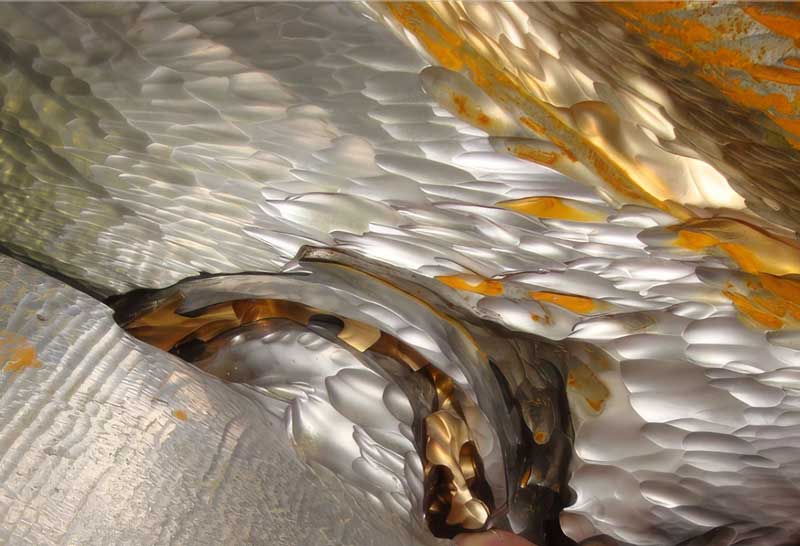
Sediment dynamics are becoming a critical challenge for hydropower operations worldwide. Climate-driven changes in hydrology are increasing the frequency and intensity of short, high-energy flood events, during which rivers transport large volumes of abrasive particles. Although these events often last only minutes or hours, they can account for a disproportionate share of cumulative turbine wear and long-term efficiency losses.
Conventional monitoring tools – such as turbidity probes or sediment concentration sensors installed at the intake – provide only indirect indications of erosion risk. Their effectiveness is frequently limited by calibration drift, harsh environmental conditions, and insufficient sensitivity to coarse sediment fractions, which are typically responsible for the most severe mechanical damage to turbine components.
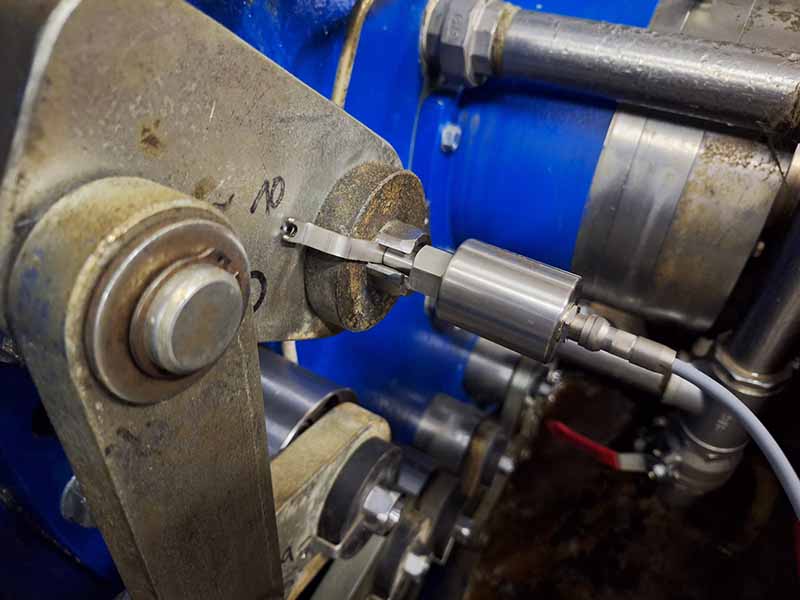
A newer class of monitoring technology aims to close this gap by observing the physical effects of particle impacts directly at turbine components. In this approach, ultrasonic structure‑borne sensors are mounted on critical surfaces such as elbows, spiral cases, guide vanes or draft tubes. These locations are particularly exposed to high-velocity particle impacts and therefore representative of actual wear processes.
When sediment particles strike the metal surfaces at high velocity, they generate acoustic emissions in the ultrasonic frequency range.
These signals are continuously recorded and analysed, providing real-time information on erosive intensity precisely where wear occurs – rather than relying on indirect water quality indicators upstream.
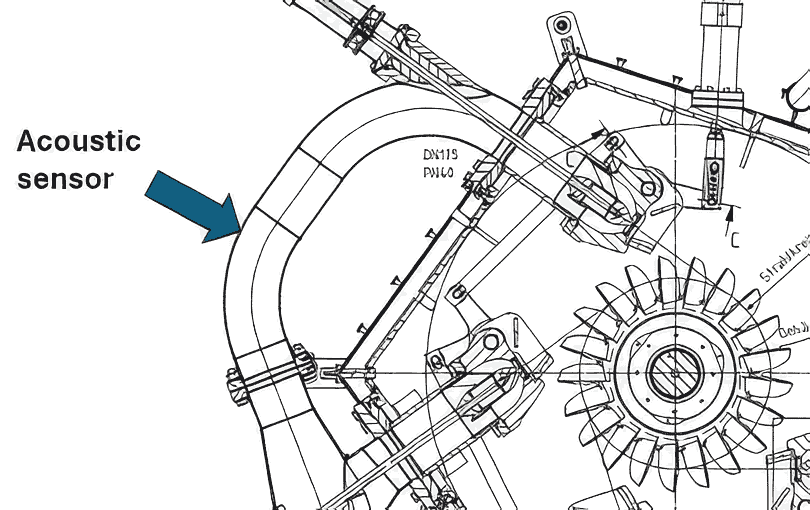
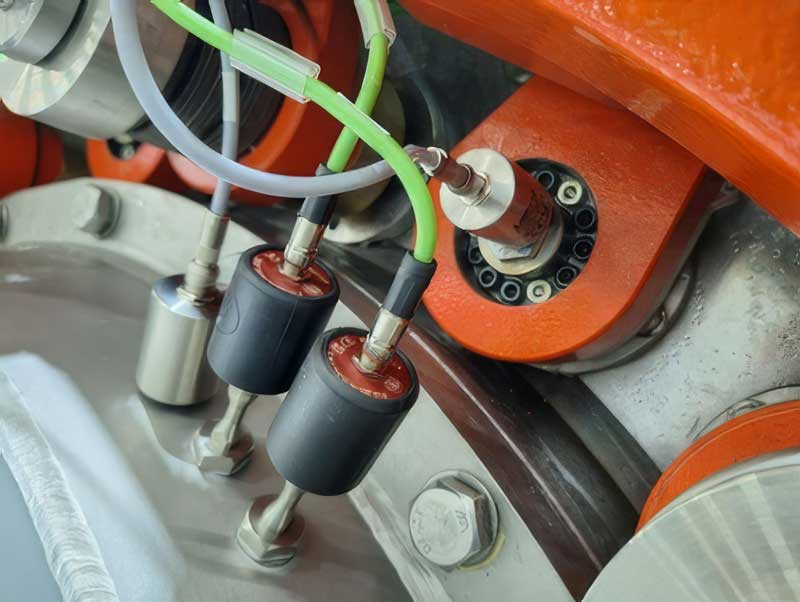
The underlying sensing principle is well established. Comparable acoustic monitoring concepts have been used for decades in the oil and gas industry to detect sand production in pipelines – a harsh environment where reliable detection of particle impacts is essential for asset protection. By transferring this proven concept to hydropower applications and extending it with modern data‑driven modelling, the method introduces a mature technological approach into a new domain.
Because turbines emit characteristic acoustic signatures that vary depending on discharge, head and operating conditions, raw measurements alone are insufficient for reliable assessment. Machine‑learning models therefore used to estimate the operation‑dependent baseline noise and subtract it from the signal. The resulting residual – free of hydraulic bias – correlates strongly with the kinetic impact energy of transported sediment and serves as a direct indicator of instantaneous wear potential.
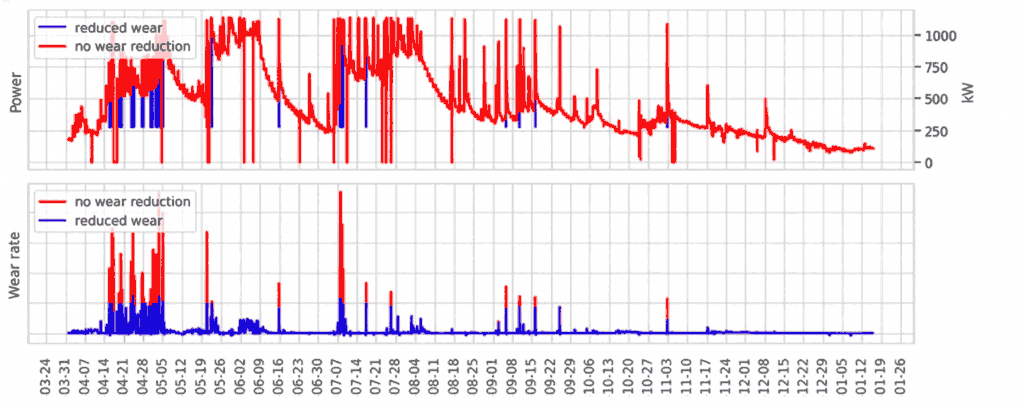
This combination of high‑frequency sensing and data‑driven noise modelling offers several advantages. The system is largely maintenance‑free, applicable across turbine types, and can be retrofitted without significant downtime. By focusing on physically meaningful impact energy rather than indirect proxies, it provides operators a clearer picture of when wear‑relevant sediment events occur, how intense they are, and how operational decisions influence exposure.
When integrated into modern SCADA and IoT architectures, the monitoring system supports real-time alarms, automated responses, and long‑term analytics.
Operators can use live indicators to implement protective strategies – such as temporary derating or operational adjustments – while historical data supports condition-based maintenance planning and lifecycle optimisation. In this way, acoustic sediment monitoring contributes to more resilient, condition-aware hydropower operation at a time when sediment-related challenges are expected to intensify.
Resource: (PDF) Novel sediment monitoring method based on structure-borne sound measurement
Team lead Data Science (Global Hydro)

Günther Weidenholzer is Team Leader for Data Science & Software Development at Global Hydro Energy. His work focuses on monitoring technologies, machine‑learning applications and digital solutions for hydropower operators, with a particular emphasis on sensor‑based diagnostics and AI‑supported asset‑health modelling.
Meet the experts behind this innovation at the World Hydropower Congress, from 7-24 September 2021. Register for free today and connect with hundreds of specialists and professionals online.