Australia can’t reach net zero on optimism alone: pumped hydro needs a bankable pathway
The following is authored by Rick McElhinney, Chief Executive Officer, Sunshine Hydro - a reflection from the IHA industry leaders meeting at Parliament House, Canberra.
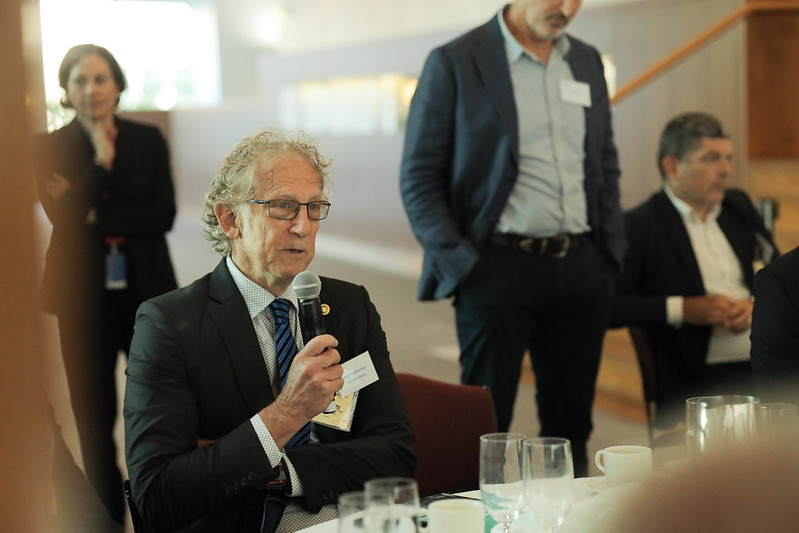
Last week, Australia’s hydropower, finance, engineering and policy leaders gathered at Parliament House in Canberra under the International Hydropower Association, led by Malcolm Turnbull and supported by Energy Minister Chris Bowen.
What stood out wasn’t the familiar consensus that we need storage. It was the calibre of the group, and the depth of operational understanding Minister Bowen brought to the room. He spoke with surprising specificity about Snowy 2.0, Marinus Link and Kidston. For those of us who live in the engineering reality of the transition, that matters because the problems we now face are no longer ideological. They are physical, commercial and programmatic.
Australia’s grid is changing faster than most people realise. Coal exits are accelerating, renewables are scaling, and variability is becoming the defining feature of the system. The question is no longer whether we build firming. It is whether we build the right firming fast enough, at a cost consumers and industry can carry.
The IHA recommendations put the scale of the task plainly. AEMO’s draft 2026 ISP implies storage must expand to 55 GW and 618 GWh by 2050. Not just short duration batteries, but storage that can ride through multi day lulls in wind and solar.
The uncomfortable truth: the market won’t build enough long duration storage
Pumped hydro is not a nice to have in ahigh renewables system. It provides synchronous strength, inertia, black start capability, fast ramping and deep energy storage, the attributes that make a grid resilient, not merely renewable.
The IHA paper calls pumped storage indispensable and makes a point too often missed in public debate. Gas can firm, but it cannot absorb surplus renewables that would otherwise be curtailed. Deep storage can.
Even more important, when integrated with wind and solar, long duration storage enables continuous 24 by 7 carbon free energy. That is mission critical for heavy industry, chemicals, steel, aluminium and emerging loads like data centres.
So why aren’t we building pumped hydro at the pace required? Because a 50 to 100 plus year asset is being asked to finance itself on revenue streams designed for 10 to 15 year investments. The IHA states it directly. The market alone won’t deliver long duration energy storage. Australia does not have a technology problem. We have a bankability gap.
Six moves that unlock projects
What was compelling about the IHA agenda is that it is practical, specific, and achievable. It focuses on the levers that move projects from promising to financial close.
1. Plan for long and deep storage explicitly. Define long duration as 8 plus hours and deep storage as 24 plus hours, embed targets into the ISP, coordinate storage with transmission planning, and create a dedicated federal hydropower policy stream.
2. Fix market signals and avoid an investment cliff. The Wholesale Market Settings Review’s Electricity Services Entry Mechanism is a step forward, but it must value storage duration and ultra long asset life. The recommendations also warn against a post 2027 cliff edge and argue for mechanisms that give long duration storage a stable pathway to revenue.
3. Adopt risk sharing models private capital can live with. Concessional finance, cap and floor style arrangements, and credit wrap solutions that reduce financing cost and bring private capital off the sidelines.
4. Streamline approvals without lowering standards. Use globally recognised frameworks such as the Hydropower Sustainability Standard to reduce rework, compress timelines and keep environmental and social performance high.
5. Fund early stage development now. Pre development is typically only 3 to 8 % of total cost, but it materially improves bankability by reducing geotechnical risk and tightening scope and capex confidence. Targeted support for geo-tech and early design can turn years of delay into months of progress.
6. Treat transmission as national security infrastructure. If pumped hydro is to deliver national value, it must be planned with interconnection and intra state reinforcement, so firm capacity flows to where it is needed, not just where it is built.
This isn’t theory. It is the program Australia needs if it wants a least cost transition that still keeps reliability intact.
Leaders are ready, their systems aren’t
A strong theme from Canberra was that political leaders want to do the right thing. Malcolm Turnbull and IHA board member Helen Barbour Bourne made the case bluntly. Without accelerated pumped hydro, Australia risks slower decarbonisation, higher prices, and missed industrial opportunity.
But there is a bottleneck we don’t talk about enough. Ministerial intent often outpaces the ability of supporting systems to translate engineering reality into bankable policy, procurement, and delivery design.
This is exactly where the IHA can play an outsized role. It represents the breadth of financiers, developers, OEMs, engineers and suppliers. With Turnbull’s leadership it is positioned to help government teams close the gap between support in principle and projects delivered.
Djandori: a case study hiding in plain sight
Australia doesn’t just need more pumped hydro. It needs the right pipeline of projects. Deliverable, financeable, sustainable, and aligned to transmission and system needs.
Djandori is also being developed with a social licence model that goes beyond jobs. Sunshine Hydro is structuring Djandori to include First Nations and community participation through equity and co investment pathways, so local groups can share in long term value creation. The intent is intergenerational wealth and shared ownership, supported by training, procurement, and ongoing participation in governance.
That’s why projects like Djandori deserve attention. Djandori is a proposed 1400 MW pumped hydro energy storage project in the Gladstone region, with around 20 hours of storage and roughly 450 metres of head. Recently, the project submitted its EPBC application. The grid is within a short distance, and the project is on private land with no national park exposure. These characteristics make it a strong example of fit for system storage: large capacity, long duration, strong head, and resilience value that current markets often underprice.
Djandori Pumped Hydro Energy Storage (PHES) is highly capital efficient because its key physical parameters sit in an optimal range for pumped hydro. With an average head of about 480 m, it lies in the widely recognised 400–500 m “sweet spot” where each cubic metre of water delivers substantial energy, reducing required flow, tunnel size and reservoir volume per MW, without the escalating technical complexity and cost that often appears at higher heads. Coupled with an upper–lower reservoir separation of only about 2.3 km, Djandori can use short, high head waterways that minimise excavation, lining and hydraulic losses, improving both capital cost and round trip efficiency. The reservoir geometry also provides an efficient rock to water ratio, with terrain that supports deep, well contained storage for relatively modest embankment lengths, which lowers cost and physical footprint per MWh of storage.
By way of comparison, Djandori’s 27 GWh of storage is equivalent to roughly 2 million home batteries, and its 1,400 MW of power output is similar to a typical coal fired power station, but delivered as flexible, fast responding renewable storage. The project’s efficient reservoir parameters and short transmission distances (around 10 km to the nearest line and about 27 km to the nearest 275 kV line) naturally mean a smaller environmental footprint than many lower head, more dispersed alternatives. In addition, the proposal to drought proof Miriam Vale through upgraded desalination and new pipeline connections embeds a clear community benefit into the project design, which is likely to attract strong local and regional support alongside its grid and market advantages.
Djandori also exposes the central point. These projects do not stall because they are technically impossible. They stall because early capital is heavy, approvals are long, and the revenue stack is uncertain. Those are solvable problems if we choose to solve them through bankable long duration revenue mechanisms, risk sharing, early stage funding, and transmission alignment.
What closing the gap actually means
If we want pumped hydro delivered at speed, support cannot be vague. It has to be bankable.
• A clear service based revenue pathway that values duration, reliability and extreme event resilience, with ESEM done properly.
• A national fallback mechanism when state procurement is not enough, so projects do not wait years for the next tender window.
• Risk sharing tools such as concessional finance, cap and floor arrangements, and credit wraps that reduce cost of capital and therefore reduce consumer cost.
• Early stage funding for geotech and design so projects can reach financial close with credible scope and price.
• Approvals acceleration that keeps standards high while cutting wasteful delay.
• Transmission alignment so storage can serve the system, not just a postcode.
Do those things, and private capital will follow, because the need is real and the asset class is proven.
The opportunity is bigger than electricity
Pumped hydro is not only about keeping the lights on. It is about re industrialisation powered by low cost renewables. Firmed clean electricity for existing industrial loads, and the foundation for new value chains.
There is also an opportunity to lift ambition beyond jobs and contracts. At Sunshine Hydro, we have designed our project structures to include community equity and co investment pathways, and we are willing to allocate meaningful equity to First Nations and local community groups. This approach is intended to create intergenerational wealth and shared ownership, not only short term employment. We are applying this mindset to our pumped hydro developments, including Djandori, because durable social licence is built when communities can participate in the upside as well as the work.
The IHA notes a jobs impact: an estimated pipeline supporting around 20,000 construction jobs and 1,300 operations and maintenance roles, plus broader supply chain benefits.
This is nation building infrastructure, the kind that pays dividends for generations if we get the framework right.
A call to action
Australia’s energy transition is now a delivery problem. The technology is known, the need is forecast, and political leadership is increasingly aligned.
The remaining question is whether we close the financial and market design gap fast enough to turn pumped hydro from strategically important into shovel ready, financeable, buildable, with projects like Djandori moving from obscurity into the national pipeline.
The IHA has put forward a roadmap. Now government departments, regulators and market designers need to execute it in the next few years.

.png)