30 years of advancing sustainable hydropower, together | #IHA30 | READ MORE


For hydropower operators, the key challenge is not recognising concrete degradation, but reliably detecting, quantifying and prioritising it under operational constraints, and linking observations to actionable decisions.
Typical degradation mechanisms like cracking, internal delamination, leakage, ASR, freeze–thaw, are well understood. The difficulty lies in their identification at scale and in representative conditions. Many critical defects remain internal, spatially distributed and poorly correlated with surface observations. This makes visual inspections insufficient to support decisions about investments or outages.
Assessment campaigns are further constrained by plant realities:
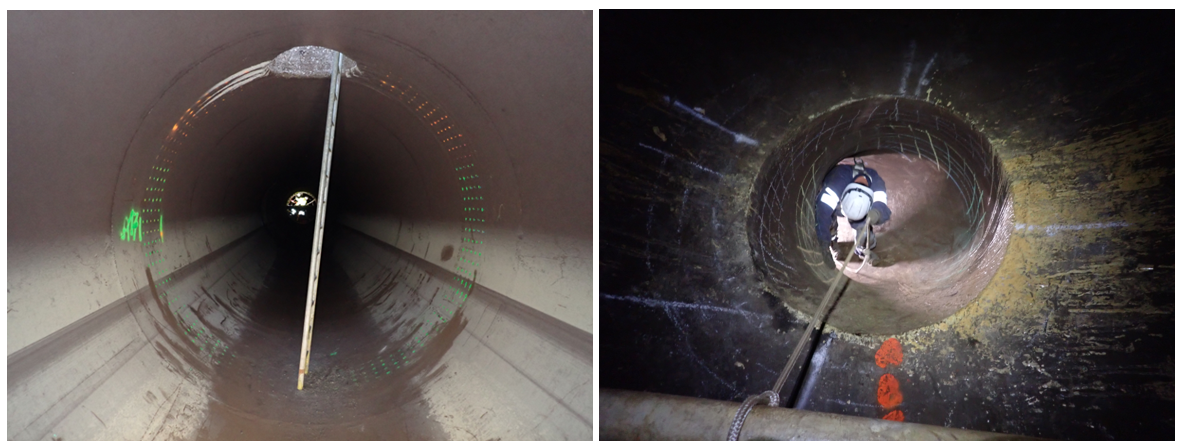
Intrusive investigations provide accurate local information but remain time-consuming, costly and difficult to deploy extensively. As a result, they do not capture the spatial variability of degradation, which is often the key parameter for defining rehabilitation scope or assessing residual life.
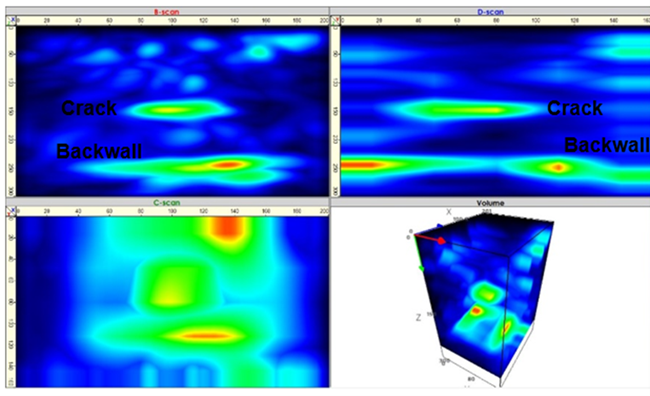
In this context, non-destructive testing (NDT) is a necessary component of a decision-oriented assessment strategy. Techniques such as ultrasonic tomography, UPV and GPR enable:
Equally important is the execution approach, combining manual, mechanised or robotic deployment depending on accessibility and safety constraints. The value of NDT lies less in individual measurements than in the consistency, coverage and comparability of the dataset, which directly supports engineering interpretation.
However, improved diagnostics only reduce uncertainty if integrated into a structured workflow linking inspection outputs to asset decisions.
A typical approach includes:
A critical step is root cause analysis, allowing differentiation between superficial degradation and mechanisms that impact durability or structural behaviour. Without this, interventions tend to be either excessive or insufficient, both leading to suboptimal use of outage time and budget.
Ageing management must also move beyond single inspection campaigns towards a time-based understanding of degradation. Repeatable NDT measurements and targeted monitoring enable tracking of defect evolution, providing a more robust basis for decision-making on maintenance, rehabilitation or life extension.
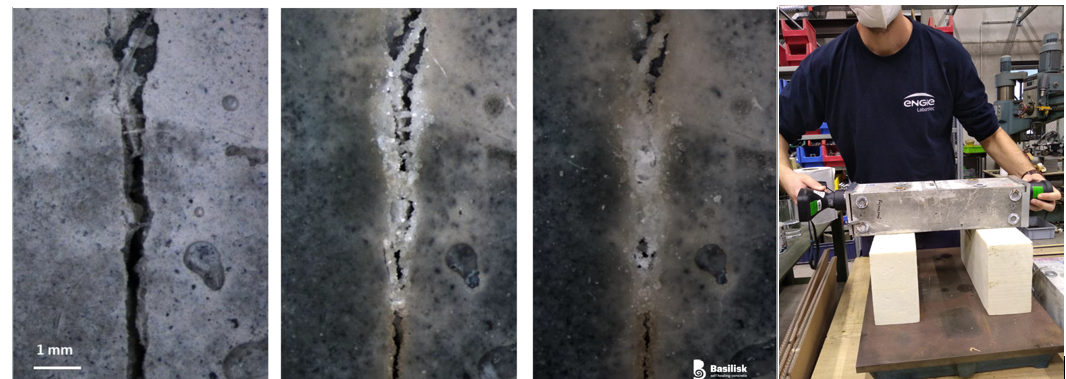
In parallel, selected material and repair innovations can complement conventional strategies. For instance, self-healing concrete solutions can be relevant in persistently humid environments, typical of hydropower structures, where crack-sealing mechanisms can be activated. Their value lies in targeted application, supporting durability rather than replacing structural repairs.
Experience from other sectors, particularly nuclear, highlights the benefits of integrating:
Transferring these practices allows hydropower operators to move from inspection-driven approaches towards risk-informed asset management.
Ultimately, the objective is not to increase inspection effort, but to reduce uncertainty in decisions. This requires combining:
Such an approach enables more robust prioritisation of interventions, optimisation of outage planning and better justification of life-extension decisions. These are key factors for ensuring long-term performance and reliability of hydropower assets.
Meet the experts behind this innovation at the World Hydropower Congress, from 7-24 September 2021. Register for free today and connect with hundreds of specialists and professionals online.